

Rezoning of Sacred Dan River Lands Sparks Condemnation from 7 Directions of Service
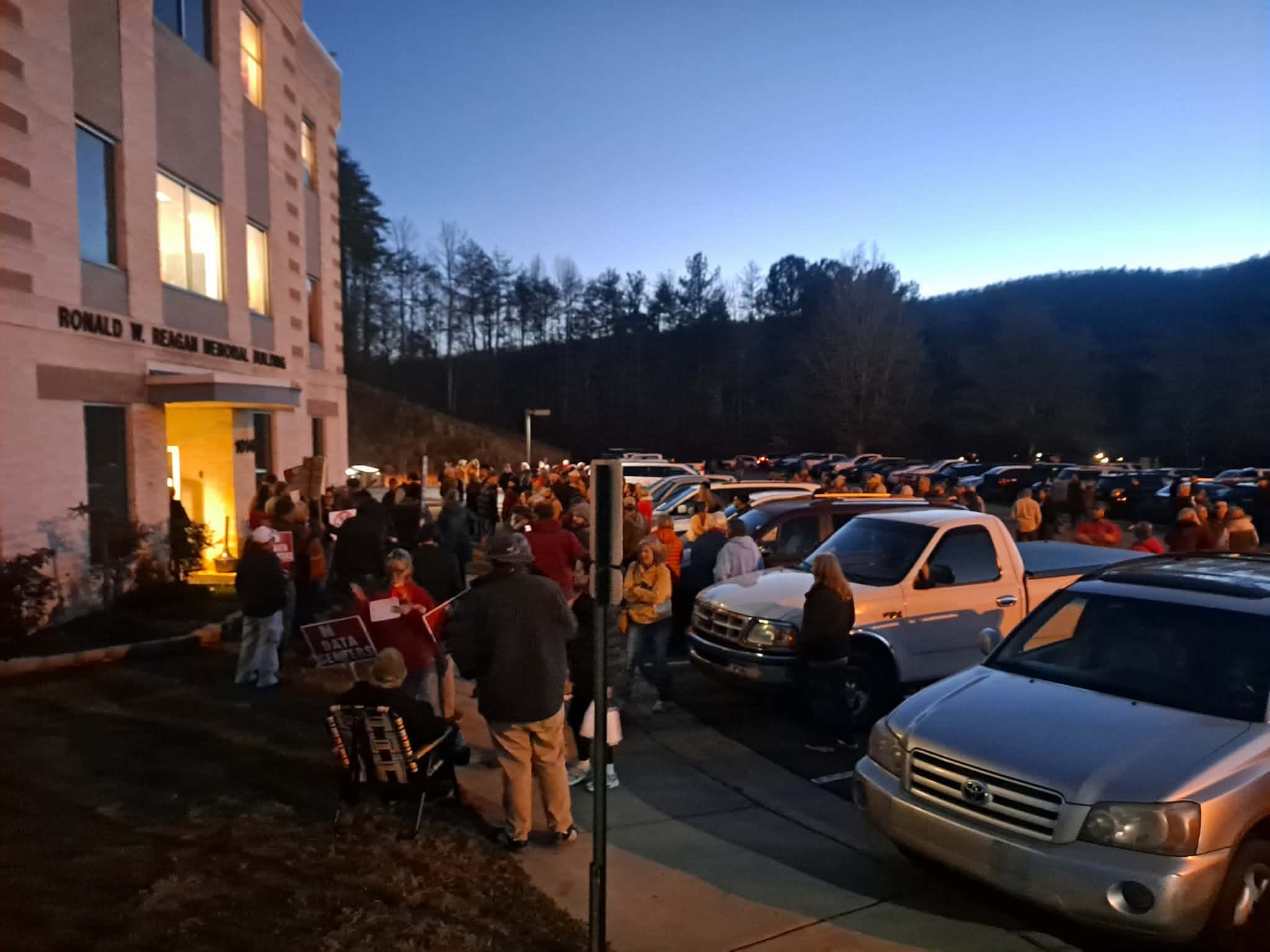
Hundreds of residents packed commission meetings, thousands signed petitions, and an audible protest could be heard outside the chambers during the vote.
Rezoning decision opens sacred Dan River lands to heavy industry despite community opposition and unresolved cultural and environmental risks.
The decision overturns the Stokes County Planning Board’s recommendation to deny the request and disregards weeks of testimony from residents, historians, environmental advocates, and descendants of communities whose ancestors are buried on and near the proposed site. “This land is not ‘empty,’ and it is not disposable,” said Dr. Crystal A. Cavalier-Keck, Founder and Executive Director of 7 Directions of Service. “It is ancestral, sacred, and alive with memory. To rezone it for heavy manufacturing is an act of erasure — of Indigenous presence, of Black history, and of the living community that depends on the Dan River.”
Sacred Land, Living History
The proposed development site is on land historically home to the Saura People in the 1600s, with documented archaeological findings, including burials discovered in the Dan River floodplain in the 20th century. Upland areas also include the remains of the Saura Town Plantation, where hundreds of enslaved Africans lived, labored, and were buried — many of whose descendants still reside in the region today. Despite developers’ assurances that construction will avoid the floodplain, **no comprehensive, independent cultural resource survey** has been conducted to assess the full extent of burial sites, ceremonial landscapes, or unexcavated remains. “Sacred sites do not end at the edge of a floodplain or stop where a zoning map changes color,” Cavalier-Keck said. “These places are interconnected landscapes, not parcels.”
False Choices: Revenue vs. Responsibility
Developers have framed the project as an economic necessity, citing projected annual tax revenues far exceeding the land’s current agricultural valuation. However, 7 Directions of Service warns that data centers are a financially risky and short-sighted foundation for rural tax bases. Across the country, data centers are increasingly overbuilt, rapidly depreciating, and technologically specialized, making them difficult to repurpose if market demand shifts, energy prices rise, or corporate tenants relocate. Unlike housing, agriculture, or locally owned businesses, these facilities are often not easily reused for community benefit once they become obsolete. “Counties are being asked to gamble their land and water on an industry that can move on in a decade or two,” Cavalier-Keck said. Tax revenue projections frequently fail to account for public costs, including road and infrastructure upgrades, emergency services and fire suppression, long-term water withdrawals and treatment, and strain on regional energy grids and ratepayers. “From an Indigenous perspective, true economic sustainability means thinking seven generations ahead,” Cavalier-Keck added. “A short-term revenue spike that leaves future generations with environmental damage and stranded infrastructure is not responsible governance.”
Community Voices Ignored
The project’s proximity to the Dan River and nearby power generation facilities raises concerns about cumulative impacts to water resources, energy demand, and climate resilience. Data centers require continuous power and large volumes of water for cooling, placing additional pressure on already stressed river systems during droughts and extreme heat events. Hundreds of residents packed commission meetings, thousands signed petitions, and audible protests could be heard outside the chambers during the vote. Still, commissioners amended the county zoning ordinance to allow data centers as a permitted use, setting a precedent for further industrialization of rural and agricultural lands. “This decision tells rural communities that their history, their health, and their future are negotiable,” Cavalier-Keck said. “That is not consent — it is coercion.”
7 Directions of Service stands with local residents, historians, and environmental justice organizations in calling for:
* Independent cultural and archaeological assessments with Indigenous consultation
* Full lifecycle financial and environmental impact analyses of data center developments
* Stronger protections for burial grounds and sacred landscapes
* A moratorium on rezoning ancestral, agricultural, and river-adjacent lands for heavy industrial data centers
“Our ancestors are not obstacles to progress,” Cavalier-Keck said. “They are the reason we are still here. The Dan River carries their stories — and our responsibility is to protect it, not convert it into a short-term revenue stream.”
About 7 Directions of Service
7 Directions of Service is an Indigenous-led nonprofit advancing land, water, and climate justice through community-based stewardship, cultural protection, and advocacy across North Carolina and the Southeast.
Tia Hunt
7 Directions of Service
+1 910-722-9459
email us here
Legal Disclaimer:
EIN Presswire provides this news content "as is" without warranty of any kind. We do not accept any responsibility or liability for the accuracy, content, images, videos, licenses, completeness, legality, or reliability of the information contained in this article. If you have any complaints or copyright issues related to this article, kindly contact the author above.
